
Machine Learning and AI
Updated: Jul 14, 2020
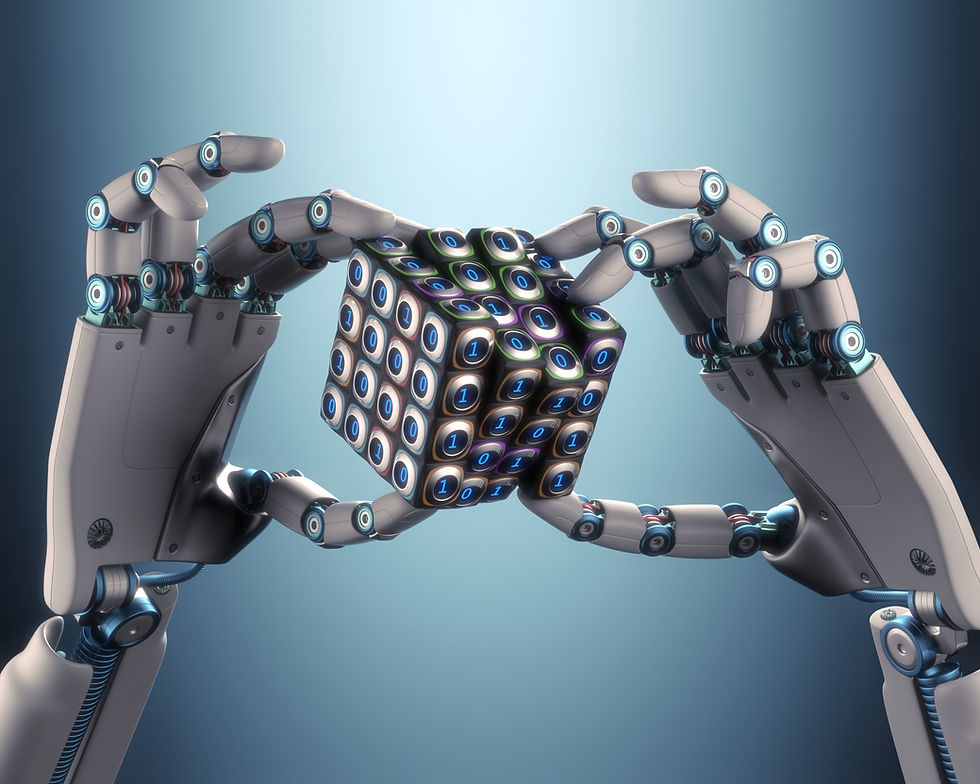
pic from unsplash.com
Machine Learning and Artificial Intelligence are topics that can be polarizing. On one hand we have Machine Learning experts like Jeremy Howard eagerly sharing the benefits of this new technology in his Ted Talk. While the other hand, we have well-respected geniuses like Stephen Hawking and Elon Musk who have a much darker view.
AI and Machine Learning are both fascinating and creepy. My first encounter with AI was a few years ago in the form of “Deepfakes.” In the Guardian article, “What Are Deepfakes- and How Can You Spot Them?" the author Ian Sample writes that the etymology came from the combination of “deep learning” to make "fake" events. A Facebook friend shared an article about how AI is used to overlap the faces of celebrities with porn stars. My reaction was disgust, but at the same time curiosity bubbled up.
Technology is said to amplify what is already existing in humanity. Recent technology trends have revealed both positive and negative aspects of society. This can be observed in our behavior online. We can agree with Howard that there are many valuable uses of machine learning. Examples of these come in the form of aiding functions for Google, LinkedIn, and medical platforms. Working with AI has saved time and reduced errors. Another benefit of AI comes in the form of entertainment. Silly videos of Steve Buscemi’s face merged with Jennifer Lawrence’s body have brought more lulz on the internet.
AI is like a double edge sword. It depends on who is wielding the technology and what the intention is. On the negative side, AI has been used to generate fake news. This has a grave impact on communications and the media. It is a scary thing when the truth is twisted. Just search on google, “Trump” and “Fake News,” lots of results will appear. In one example, Trump said that he has the balls to withdraw from the Paris Climate Agreement. AI has also been used for scams to get more money from business owners through the technology of "voice skins."
In the YouTube video, “Deepfake Videos Are Getting Terrifyingly Real,” the NOVA PBS channel shared concern about “Deepfakes." This technology can be used to sway political campaigns. Sometimes there is only a short margin needed to determine which candidate will win. Some people don’t know how to spot "deepfakes" yet, and it will be easy to deceive them.
Scientists are working on these problems right now. There is an MIT review article titled “Deepfake-Busting Apps Can Spot Even a Single Pixel out of Place,” in which writer Karen Hao shares a website called Serelay. Serelay.com is working with Google to verify if picture or video is real or fake for the media. This is good news, but there is still so much work to be done when it comes to false information.
The rapid development of AI and Machine Learning can feel like we are living in an episode of Black Mirror. AI can't be and shouldn't be stopped. It comes with development and the possibilities can be exciting. However, I agree with Musk's interview on The Joe Rogan podcast episode no.1169. Musk specifies that there should be ethics and guidelines that regulate AI and Machine Learning.
Technological progress should be more valuable than harmful. As humans, we should be able to control our inventions and not let it control us. This is already prevalent on how hooked and dependent we are to our smartphones. While technological advancement is great, there should be balance and guiding principles in which we keep our humanity.
Sources:
• https://www.theguardian.com/technology/2020/jan/13/what-are-deepfakes-and-how-can-you- spot-them
• https://www.youtube.com/watch?v=T76bK2t2r8g&feature=youtu.be
• https://www.youtube.com/watch?v=Ra3fv8gl6NE
• https://www.technologyreview.com/2018/11/01/139227/deepfake-busting-apps-can-spot-even- a-single-pixel-out-of-place


